Palliative social work
Oral History of Palliative Social Work specialty, resources, publications, education, connections

Purpose: Capture the Legacy of the Palliative Social Work Specialty.
Our goal is to build an anthology of interviews with social workers who created the specialty to document its rich legacy and with those who advanced the field of palliative social work.
Process: We intend to record this history with audio/video interviews to capture the words of those who were instrumental in building our specialty.
Our intention is to share these interviews, along with other resources and historical documents on this website, which is available to the public.
The project is not affiliated with any organization.
We acknowledge and understand that we may be missing voices and advocates who built the field. We are making every effort to include all the people, and especially those who may have been marginalized, to ensure their stories are told. If you have suggestions for people to contact, please use the contact form and let us know.
Explore Palliative Social Work
Oral History of PSW Project:
Resources for PSW
Education
Books
The Reflections Project 2020
Interviews:
Grace Christ
Susan Blacker
Gary Stein
June Simmons
Judy Peres
Colleen Mulkerin
Kathie Supiano & Jamey Boudreaux
Barbara Jones
Shirley Otis-Green
Ellen Cskai
Joan Berzoff
Stacy Orloff
Terry Altilio
Mary Raymer
Mercedes Bern-Klug
Maya Genovesi &
Robin Lawson
Michael Light
Myra Glajchen
Anne Kelly
Interview Highlights
Quotes
Working within hierarchy
“…we’re working in hierarchical settings where we are working to establish our expertise, our position, our power in those settings, which is so very important because of the value base that we bring to this work.”
Grace Christ, Susan Blacker & Gary Stein Interview
Nothing could be more clinical
“… in social work and in social work education where I met enormous resistance from my colleagues who said, this isn’t clinical work.”
Joan Berzoff Interview
We would like to share our deep sadness learning of the death of Joan Berzoff. Her interview was inspiring and reflected the rich work she did throughout her career.
Funding & program initiatives
“So, I came from long-term care to a major initiative…that Robert Wood Johnson had put on the map. …we developed that first 2002 social work conference at Duke.”
Judy Peres Interview
Learning and discovery are always available
“The work is going to always be there. And the ability to discover new and better ways to do things, always available. So, I just think staying at the heart of learning and discovering and collaborating … that’s what before us and we should seize the opportunity.”
June Simmons Interview
Barbara Monroe was a social worker for over forty years. She was Chief Executive of St Christopher’s Hospice (London) and Chair of the national Childhood Bereavement Network. She has led and lectured on numerous international training programmes and has written extensively about psychosocial aspects of palliative care.
International Participant from the UK at the Social Work Summit 2005, Washington DC
Then & Now: by Barbara Monroe, April 2025
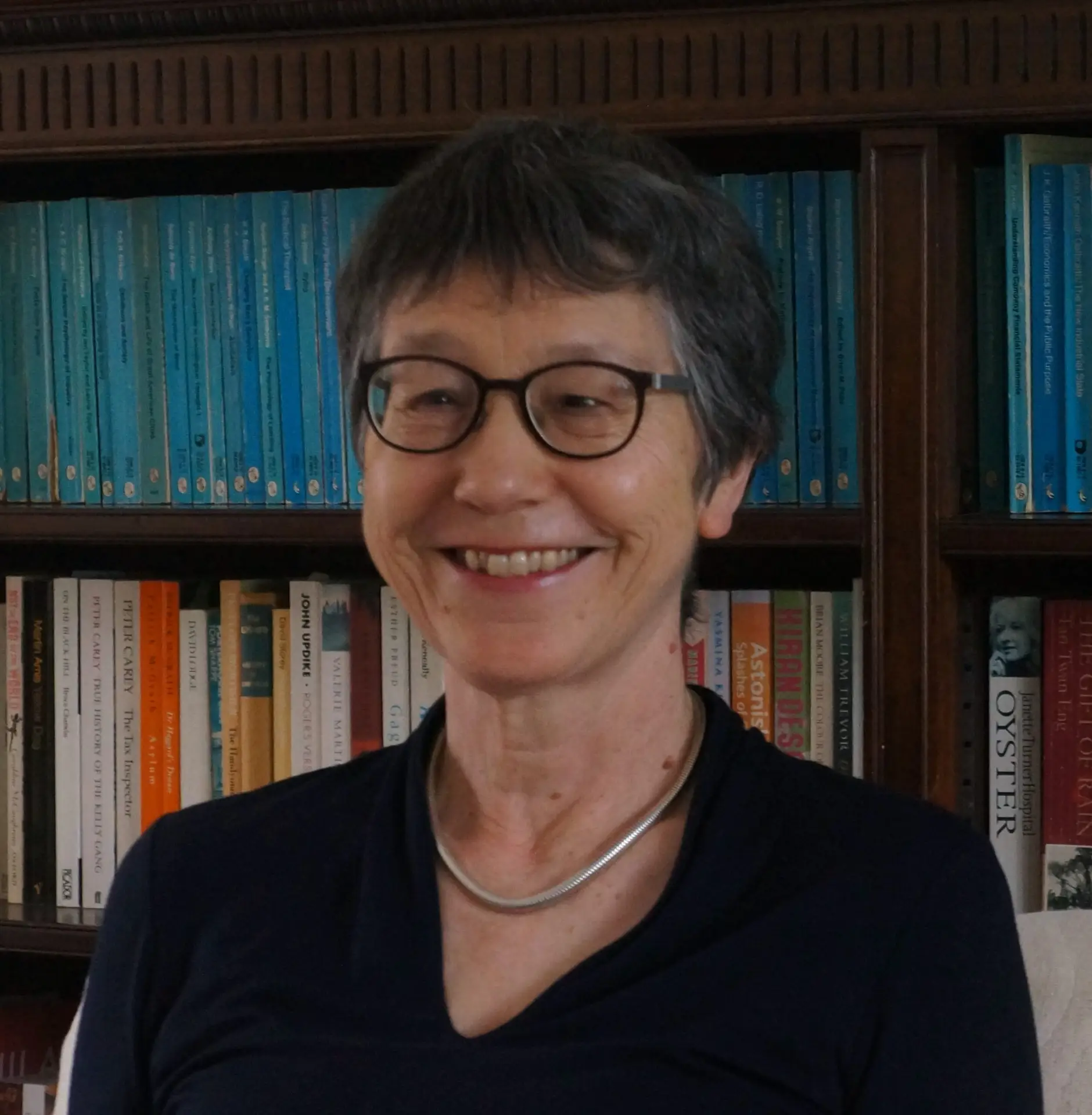
“So long ago – the Washington Summit….I would have been talking about how pivotal the role of the skilled and experienced social worker is in the provision of good quality palliative care; access to which now, as then, is inadequate and unequal.
Other professions have their role, for example, at St Christopher’s we always insisted on employing the very best liaison psychiatry. However, overall, there has been too much cherry picking and pandering to particular interests, rather than delivering an effective response to those most in need.
Essential in the foundation are social workers, those with the ability to undertake biopsychosocial assessment and support; ie complex relationship building, the skills and willingness to intervene in social relationships, statutory and welfare entitlements, mental health and broader risk assessments and ongoing support, an understanding of and the skills to deploy a wide range of complex legislation including assessing competence, and safeguarding the vulnerable and disadvantaged, both adults and children.
Added to this, professionals who are used to working in partnership with other professionals and services in the various communities served, both statutory and voluntary; eg housing, education, medical and social care, to build individualized packages of care. No other profession brings this integrated skill set, and integration is vital for equitable and cost effective service delivery. We and others need to avoid defending history or a particular form of supply and professional silos. It is clear now that dying can’t be got right within and by hospice and palliative care services alone.
These services can and should be hubs to support the development of competent and confident service delivery across settings and communities. What is an effective response to need? Social workers are best placed to lead this work and will need to move beyond individual advocacy to organisational engagement, system level change and service redesign. Good care is not a commodity, it is a partnership.
“If ours were a logical system, most people working and most of the money in healthcare would be under the control of social workers…social workers never look away.”
Diane E. Meier
Pg xviii Oxford Textbook of Palliative Social Work, 2022.